
Stripe vs Opayo vs Worldpay
13 min read

A Payment Processing Integration Showdown
Every second of friction at checkout costs revenue. Slow processing, failed payments, and clunky user journeys can all add up to erode a business’ revenue and damage brand trust.
As customer expectations around speed, security and flexibility of online payments increases, payment processing integrations have become a core part of any enterprise tech stack.
With payment processing integrations at the heart of seamless transactions, choosing the right one for your business has never been more essential. Choosing the wrong solution could ultimately impact consumer trust, and your business’ growth; while choosing the right solution can make a real difference towards improving the operational efficiency of your business.
In this blog, we compare three major providers in a payment processing integration showdown! Stripe, Opayo (previously known as Sage Pay or Protx) and Worldpay.
But for the uninitiated…

What are Payment Processing Integrations?
Payment processing integrations connect your digital ecosystem to a payment gateway, enabling safe and reliable online transactions.
They manage the full journey from capturing payment details through to authorisation and settlement. Simply put, they ensure your customers can complete purchases efficiently while your business receives funds securely.
Payment processing providers like Stripe, Opayo and Worldpay manage this full payment processing journey.
Understanding the Competition
Before we jump into the comparisons, let's take a moment to understand what each of the payment processing integrations offers at a fundamental level!
What is Stripe?
Stripe is a leading financial infrastructure platform designed to give businesses full control over their payments. Its powerful suite of APIs enables deep customisation, allowing teams to build bespoke checkout experiences, automate subscription management and implement advanced fraud detection.
Stripe supports businesses of all sizes, from startups to global enterprises, and is particularly valued for its flexibility, multi currency support and international payments support (processing over 135 currencies for eCommerce, software platforms, and marketplaces). Its ecosystem also includes tools for invoicing, issuing cards, and managing complex marketplaces, making it a complete solution for organisations seeking scalable and feature rich payment processing integrations.
What is Opayo?
Opayo is a UK based payment processing provider known for reliability, security and simplicity. It provides a range of solutions including card payments (including online, in-store and over the phone transactions), recurring payments, subscriptions and eWallet integrations; all designed for quick and dependable deployment.
Opayo offers integrations with popular eCommerce platforms and APIs for custom systems, whilst also providing user friendly dashboards with real-time insights, clear reporting tools and strong compliance support. This makes it an ideal choice for companies looking for straightforward integrations that still meet enterprise security standards.
What is Worldpay?
Worldpay is one of the most established names in payment processing, offering enterprise grade solutions with global coverage. Its platform supports card payments, alternative payment methods such as digital wallets, bank transfers and regional payment options, recurring billing and multicurrency transactions across borders. It also handles both in-store (POS) and eCommerce transations.
Worldpay is often chosen by large organisations that handle high volumes of transactions or operate in multiple markets. Its infrastructure is built for scale, with sophisticated fraud prevention tools (FraudSight suite), detailed reporting and extensive integration options that connect seamlessly with enterprise eCommerce systems, point of sale platforms and bespoke applications.
What are the features of the best payment processing companies?
Any good comparison showdown needs set features to compare the contenders! For this, let’s explore what features high performing payment processing systems share…
Multiple Layers of Security
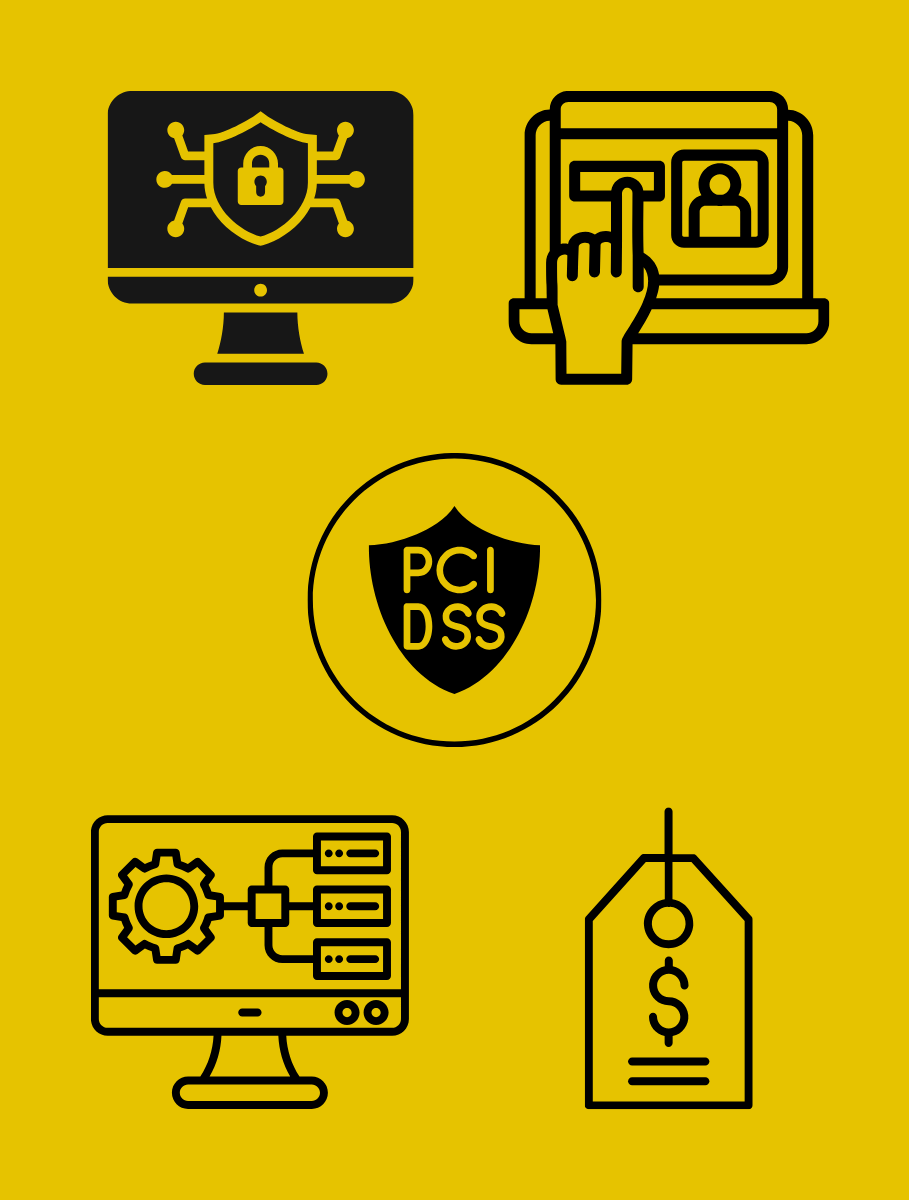
Encryption, tokenisation and fraud detection are standard in top tier providers, protecting both businesses and customers from risk.
User Friendly Interface
Intuitive dashboards and workflows allow teams to manage payments, reporting and refunds efficiently.
PCI Compliance
Adherence to PCI-DSS standards guarantees secure handling of cardholder data and regulatory compliance.
Integration with Payment Gateways
Flexible integration options allow businesses to connect payment functionality into CMS platforms, ecommerce systems or bespoke enterprise applications.
Price
When it comes to choosing a payment processing provider, the above features are of the highest importance; however, the price point of any product or service is always a factor to be considered!

Stripe vs Opayo vs Worldpay
Now that we understand who our payment processing integration competitors are, and what makes a good payment processing integration… let's get into the comparison!
Multiple Layers of Security
Security is a cornerstone of any payment processing solution, and each of these providers approaches it with slightly different strengths.
Stripe delivers cutting edge protection with advanced fraud detection tools powered by machine learning (Stripe Radar). Its adaptive risk analysis monitors millions of data signals across its global network in real time, identifying unusual patterns and reducing the likelihood of chargebacks or fraudulent activity. Additionally, Stripe uses data tokenisation (Stripe.js) and end to end encryption to protect cardholder data during every stage of the payment process.
Opayo provides consistent and reliable protection aligned with UK security standards. Its platform emphasises strong encryption, secure data storage and layered authentication. Per parent company Elavon’s customer centre guide, Opayo’s 3-D Secure Authentication “is also the only fraud prevention scheme that is available that offers companies liability cover for transactions that are verified by the checks.” This makes Opayo particularly appealing to businesses that require dependable, standards driven security without the need for extensive customisation or additional technical management.
Worldpay is built for global operations, delivering enterprise grade fraud prevention and monitoring tools. Its platform is capable of handling high transaction volumes across multiple regions, with configurable fraud rules, risk scoring and integration with third party monitoring systems to protect both your business and your customers. Explore the guide “The Growing Importance of Fraud Management Tools for Security” for an in depth look into Worldpay’s fraud management.
Verdict
All three providers offer robust security. Stripe leads in innovative, data driven protection. Opayo focuses on dependable, standards aligned security for UK businesses. Worldpay excels at scale and international coverage.
User Friendly Interface
A payment processing system is only as effective as the teams using it. Therefore, a user friendly interface is essential to quickly and effectively onboard your new technology into your business’ tech stack.
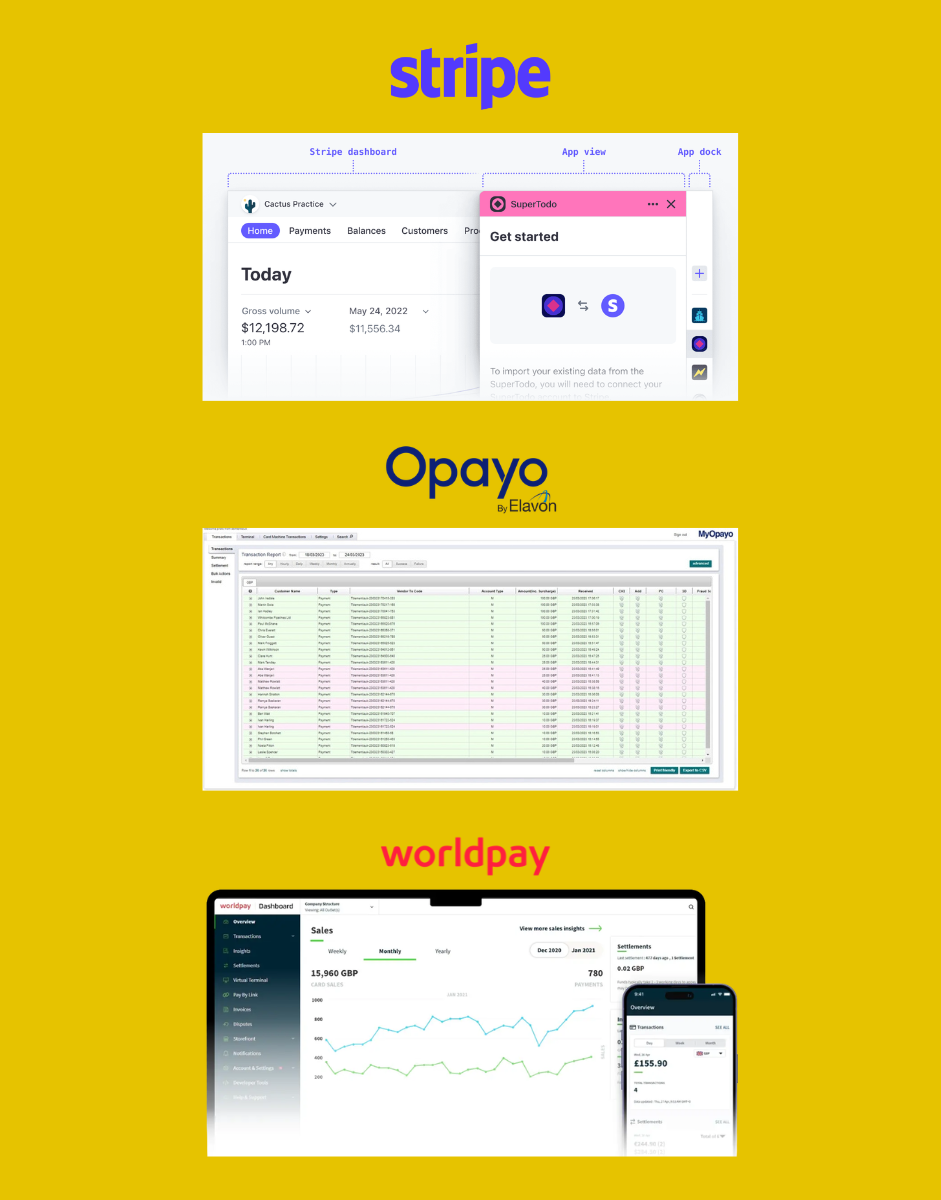
Stripe provides a flexible dashboard with extensive functionality, including detailed reporting, subscription management, and developer tools. Its UI is often described as a "gold standard" for payment technology, and its “no code” customisation options allow users to use prebuilt payment forms and payment links without needing to write code.

Opayo emphasises simplicity and accessibility. Its MyOpayo dashboard is an intuitive web-based portal with straightforward workflows and intuitive reporting. This allows teams to manage transactions, refunds and reconciliations quickly and with minimal training making it well suited to businesses that want a fast, low friction implementation.
Worldpay offers comprehensive reporting and control tools designed for complex operations. While powerful, due to its advanced functionality it has a steeper learning curve for teams managing high transaction volumes across multiple markets.
Verdict
Stripe and Opayo prioritise ease of use and speed of adoption, enabling customisation and flexibility for technical teams. Worldpay delivers operational depth for enterprise scale organisations.
PCI-DSS Compliance
Compliance with PCI-DSS standards is non-negotiable for secure payment processing. All three providers meet or exceed these requirements, ensuring cardholder data is handled safely throughout the transaction process.
Stripe simplifies PCI-DSS compliance through tokenisation, developer tools and clear documentation. This reduces the burden on internal teams while maintaining high security standards. Stripe is also certified to the highest level of payment security available (PCI Service Provider Level 1).
Opayo provides structured compliance processes tailored to UK businesses, with clear guidance for implementation and reporting. Its approach reduces risk while supporting straightforward audits. Opayo is also certified to the highest level of payment security available (PCI Service Provider Level 1).
Worldpay supports compliance across multiple regions and regulatory environments, making it suitable for enterprises operating internationally. With its SaferPayments system, Worldpay simplifies PCI-DSS compliance, reducing risk, and keeping businesses ahead of changing standards with minimal effort from your team. Worldpay integrations also include quarterly PCI-DSS external vulnerability scanning and a PCI-DSS certificate of compliance upon successful attestation as part of its key features.
Verdict
All providers maintain high compliance standards. The differences come down to scale and geography, with Stripe simplifying compliance for technical teams, Opayo focusing on UK regulations, and Worldpay supporting complex global environments.

Ease of Integration with Payment Gateway
The ability to integrate seamlessly into your existing systems determines the effectiveness of your business’ chosen payment processing integration.
Stripe enables highly flexible, API driven integrations, making it ideal for bespoke builds and custom workflows. Businesses can connect Stripe with their website, mobile app, subscription platforms, marketplaces and more. Stripe is also extremely flexible in that it can integrate with numerous third-party partner tools to extend its functionality.
Opayo supports integrations with popular ecommerce platforms, CMS solutions and common enterprise systems. Its approach balances flexibility with efficiency, allowing teams to implement payment processing quickly without heavy development. Some examples of Opayo integrations include:
- Magento / Adobe Commerce
Using third party extensions, businesses with Magento as part of their tech stack can integrate Opayo to manage secure online payments, subscriptions, and recurring billing. - Shopify
Opayo provides third party apps or API connections to support Shopify stores, enabling card payments and refunds without leaving the platform. - PrestaShop
Community built modules allow PrestaShop merchants to process payments safely with Opayo and comply with PCI standards. - OpenCart
Opayo modules integrate with OpenCart stores for secure online payment processing. - Custom CMS or bespoke platforms
Opayo provides APIs for custom integrations with custom CMS solutions or enterprise applications, enabling advanced payment processing without relying solely on pre-built plugins.
Worldpay supports integrations with complex enterprise systems, supporting large scale operations and multicurrency processing. Its platform connects directly with ERP and CRM solutions such as SAP Commerce Cloud, Microsoft Dynamics 365 and Oracle NetSuite, allowing centralised management of payments, reconciliation and reporting across multiple departments and markets. Through its APIs, Worldpay can also integrate with bespoke enterprise applications, giving organisations full control over payment workflows, multi-channel operations and global transaction monitoring. This makes it a robust solution for enterprises that need scalable, end-to-end payment processing built to handle high volume and multi-region complexity.
Verdict
Stripe supports highly customised, API driven integrations designed for developer led implementations. Opayo focuses on integrations through plugins, extensions and APIs for common ecommerce platforms. Worldpay supports enterprise payment integrations designed for large scale and global payment operations.

Price
Stripe's standard pricing for online card payments in the US is 2.9% + 30¢ per successful transaction, with no setup fees or monthly contracts. It operates on a pay-as-you-go model, with additional costs for international cards (+1.5%), currency conversion (+1%), and specialized products like Billing or Invoicing. Explore Stripe’s pricing in further detail here - https://stripe.com/pricing
Opayo’s pricing typically starts from £25 + VAT per month for their standard online payment gateway; which includes 350 free transactions and 12p per transaction after this. Though Opayo does not officially state it’s prices, you can explore Opayo’s price structure in further detail here - https://paymentscompared.co.uk/providers/opayo-elavon
Worldpay's pricing varies based on business size, turnover, and chosen package, typically combining monthly gateway fees with per transaction percentage fees. Though Worldpay does not officially state it’s prices, you can explore Worldpay’s price structure in further detail here - https://www.merchantsavvy.co.uk/payment-processors/worldpay-review-fees/
Verdict
For a simple and straightforward pricing plan, Stripe offers the most information up-front; however for enterprise organisations and organisations with a high throughput of payments, Opayo and Worldpay may provide better rates dependent upon enquiry.
Are You Ready to Empower Your Payment Processing?
The success of your payment processing strategy depends on how well you payment processing system is integrated into your wider digital ecosystem. Poorly executed integrations can lead to lost revenue, operational inefficiencies and frustrated customers.
Here at Cold Banana, we deliver enterprise level payment processing integrations designed around performance, security and scalability. Partnering with us provides your business with:
Faster time to market
Streamlined integration with your ecommerce platforms, CMS solutions and enterprise systems.
Enhanced security and compliance
Fully PCI-DSS compliant payment processing integrations with fraud detection functionalities.
Operational efficiency
Centralised payments, reconciliation and reporting for smoother workflows.
Scalable infrastructure
Support of multicurrency transactions, multi-channel operations and enterprise growth.
Customised user experiences
Optimisation of checkout journeys to increase conversion and customer satisfaction.
Investing in a professional, enterprise focused payment processing integration ensures your business collects payments securely, optimises operational efficiency, and enables your business to scale with confidence.




At Cold Banana, we've been helping businesses like yours thrive since 2015. Our expertise span across custom web development, seamless integrations and user-friendly platforms.
If you'd like to learn more about how we can support you, get in touch.